In the realm of bio-inspired technology, few innovations capture the imagination quite like compound eye radar systems. Drawing inspiration from the intricate visual systems of insects, engineers have developed panoramic detection systems that mimic nature's brilliance. These cutting-edge devices promise to revolutionize fields ranging from autonomous vehicles to military surveillance, offering unprecedented capabilities in motion tracking and environmental mapping.
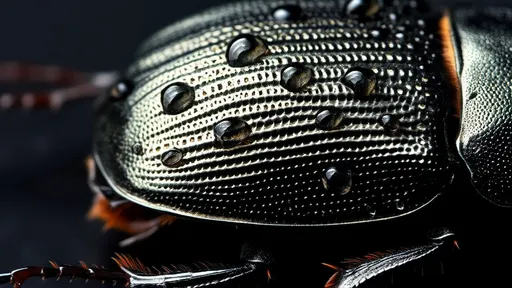
The compound eyes of insects like dragonflies and bees represent one of evolution's most fascinating adaptations. Unlike human eyes with single lenses, compound eyes consist of thousands of individual photoreceptor units called ommatidia. This structure provides insects with an exceptionally wide field of view and remarkable sensitivity to movement. By emulating these biological principles, researchers have created radar systems that can detect objects across a 360-degree panorama without mechanical rotation.
Traditional radar systems rely on rotating antennas or phased arrays to scan their surroundings, creating inherent limitations in refresh rates and mechanical reliability. The compound eye radar paradigm eliminates these constraints through its fixed, multi-faceted architecture. Each receiver element functions like an individual ommatidium, working in concert with others to create a comprehensive picture of the environment. This parallel processing approach enables simultaneous tracking of multiple targets with exceptional temporal resolution.
One of the most groundbreaking applications of this technology appears in the automotive industry. Autonomous vehicles require constant, high-fidelity awareness of their surroundings to navigate safely. Compound eye radar systems provide this capability with lower power consumption and greater reliability than conventional LiDAR or camera-based systems. The technology's inherent resistance to interference from weather conditions like fog or rain makes it particularly valuable for real-world driving scenarios where optical systems often fail.
Military and aerospace applications have also shown keen interest in this innovation. The panoramic detection capability offers significant advantages for threat identification and collision avoidance in complex environments. Unlike traditional radar that scans sequentially, insect-inspired systems can track multiple incoming projectiles or aircraft simultaneously with equal precision across all directions. This capability proves invaluable for missile defense systems and drone swarms operating in contested airspace.
The development process hasn't been without challenges. Replicating the insect eye's neural processing capabilities required breakthroughs in neuromorphic computing. Engineers had to create algorithms that could interpret signals from thousands of micro-receivers in parallel, mimicking how insect brains process visual information. Recent advances in machine learning have finally made this possible, enabling systems that can distinguish between relevant targets and background noise with insect-like efficiency.
Environmental monitoring represents another promising application area. Researchers have deployed experimental systems for wildlife tracking in dense forests and marine environments where conventional radar struggles. The technology's ability to detect minute movements through foliage or water surfaces could transform ecological studies and poaching prevention efforts. Early prototypes have successfully tracked individual bats in flight and fish movements in turbid waters - feats impossible with traditional monitoring equipment.
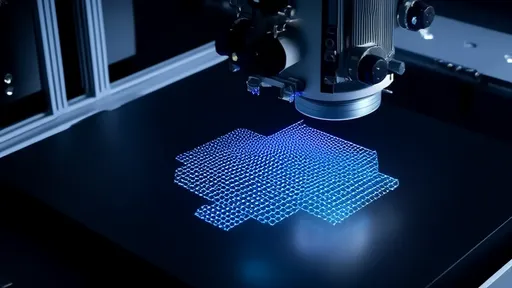
As the technology matures, manufacturers face the challenge of scaling production while maintaining precision. The microscopic scale of individual receiver elements demands advanced fabrication techniques borrowed from semiconductor manufacturing. Industry leaders predict that within five years, compound eye radar systems will become compact and affordable enough for consumer electronics, potentially replacing conventional proximity sensors in smartphones and smart home devices.
The ethical implications of such powerful surveillance capabilities haven't gone unnoticed. Privacy advocates have raised concerns about the potential for undetectable, omnipresent monitoring. Unlike visible cameras or noticeable radar installations, compound eye systems can be embedded invisibly in structures or vehicles. Policymakers now grapple with establishing frameworks to prevent misuse while allowing beneficial applications to flourish.
Looking ahead, researchers are exploring hybrid systems that combine compound eye radar with other bio-inspired technologies. Some teams are experimenting with integrating polarization sensitivity like that found in mantis shrimp vision, which could enable detection of material properties beyond simple location data. Others are working on adaptive systems that can dynamically reconfigure their detection patterns based on environmental conditions - much like how insects adjust their visual focus.
From laboratory curiosity to transformative technology, compound eye radar systems demonstrate the immense potential of biomimicry. As engineers continue refining these systems, we may soon find insect-inspired detection becoming ubiquitous - quietly revolutionizing how machines perceive and interact with the world around them. The convergence of biology and engineering has never produced more fascinating results, proving that sometimes, the best solutions come from observing nature's smallest innovators.

By /Jul 28, 2025

By /Jul 28, 2025

By /Jul 28, 2025

By /Jul 28, 2025

By /Jul 28, 2025

By /Jul 28, 2025

By /Jul 28, 2025

By /Jul 28, 2025

By /Jul 28, 2025

By /Jul 28, 2025

By /Jul 28, 2025

By /Jul 28, 2025
By /Jul 28, 2025

By /Jul 28, 2025

By /Jul 28, 2025
By /Jul 28, 2025
By /Jul 28, 2025

By /Jul 28, 2025

By /Jul 28, 2025

By /Jul 28, 2025
