Shark Skin Wind Turbine Blades: Groove Drag Reduction for Enhanced Power Generation

Jul 28, 2025 By

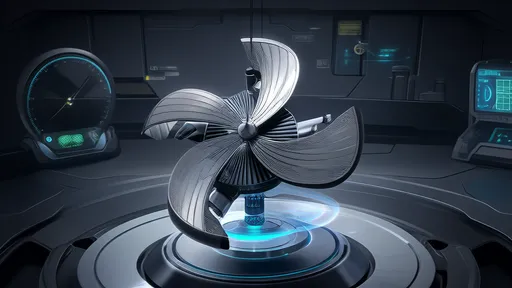
The quest for more efficient renewable energy solutions has led engineers to an unlikely muse: the shark. Known for their effortless speed and agility in water, sharks owe much of their hydrodynamic prowess to the unique texture of their skin. This biological marvel has now inspired a breakthrough in wind turbine technology, where microscopic grooves modeled after shark skin are being used to reduce drag and significantly enhance power output.

Researchers have long been fascinated by the denticles—tiny, tooth-like scales—that cover a shark's body. These structures create a complex surface pattern that disrupts turbulent water flow, allowing sharks to move faster with less energy expenditure. Translating this concept to aerodynamics, scientists have developed turbine blades with similarly textured surfaces. Early field tests suggest these bio-inspired designs could increase energy capture by as much as 15% under optimal wind conditions.

The Science Behind the Innovation

At the heart of this technology lies the principle of boundary layer control. When air flows over a traditional smooth turbine blade, it creates friction that leads to energy-wasting turbulence. The shark skin pattern, consisting of strategically placed grooves just 50-200 microns deep, manipulates this airflow in two critical ways. First, the ridges prevent turbulent eddies from forming near the blade surface. Second, they create micro-channels that guide the air in a more orderly fashion along the blade's contour.

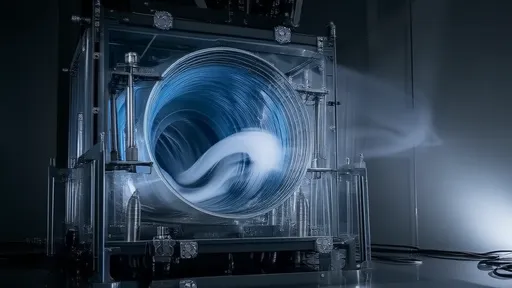
Laboratory wind tunnel tests at the University of Cambridge revealed that the riblet pattern—as the groove design is technically called—can reduce aerodynamic drag by up to 32% compared to conventional blades. This reduction translates directly to lower cut-in wind speeds (the minimum speed needed for power generation) and improved performance in the crucial 5-15 mph operational range where most turbines spend the majority of their operating time.

From Laboratory to Wind Farm

The first full-scale implementation occurred off the coast of Scotland, where a test turbine equipped with the riblet-treated blades operated for 18 months alongside conventional turbines. Data showed a consistent 8-12% power output increase across various wind conditions, with the most dramatic improvements occurring during moderate winds—precisely when utilities need reliable production to meet base load demands.

Manufacturing these textured surfaces presents unique challenges. The grooves must maintain precise dimensions across the entire 60-meter blade length while withstanding years of weather exposure. Several companies have developed specialized application techniques, including a patented laser-etching process that creates the pattern on the blade's protective coating without compromising structural integrity.

Economic and Environmental Impacts

For wind farm operators, the technology offers a compelling value proposition. The increased energy yield comes with no additional land use or major hardware changes—just surface modifications to existing blade designs. Preliminary calculations suggest the upgrade pays for itself within 3-5 years through extra electricity sales. At utility scale, a 10% output boost across a 500 MW wind farm could power an additional 15,000 homes annually.

Environmental benefits extend beyond clean energy production. The efficiency gains mean fewer turbines are needed to meet energy targets, reducing material consumption and visual impact. Additionally, the riblet surface appears to deter insect accumulation—a surprising side benefit that further maintains aerodynamic efficiency compared to standard blades that suffer performance degradation from bug splatter.

Future Developments and Challenges

Next-generation designs are exploring dynamic groove patterns that can adapt to changing wind conditions. Some prototypes feature microscopic flaps that adjust their angle based on wind speed sensors, mimicking how some fish can raise or lower their scales. Other research focuses on combining the riblet technology with other biomimetic concepts, such as owl-inspired noise reduction features to address wind turbine sound emissions.

While the technology shows immense promise, hurdles remain. The long-term durability of the surface patterns needs verification, particularly in harsh environments with blowing sand or ice accumulation. There's also the challenge of retrofitting existing wind farms—a process that would require blade removal and specialized treatment facilities. Nevertheless, as renewable energy demands grow more urgent, solutions like shark skin turbines demonstrate how nature's evolutionary innovations can power humanity's sustainable future.
Recommend Posts
Science

Causal Scientific Revolution: Machine Learning Dispels the Fallacy of Correlation

By /Jul 28, 2025

The field of artificial intelligence is undergoing a quiet but profound transformation—one that challenges decades of statistical dogma and reshapes how machines understand the world. At the heart of this shift lies causal inference, a framework that moves beyond the seductive but often misleading realm of correlations to uncover the true drivers behind observable phenomena. This isn't merely an academic debate; it's rewriting the rules of how we build predictive models, interpret algorithmic decisions, and ultimately trust machine intelligence.
Science

Research Blockchain: Traceability and Evidence of the Entire Experimental Cycle

By /Jul 28, 2025

The integration of blockchain technology into scientific research has opened up new possibilities for ensuring transparency, accountability, and trust in the experimental process. One of the most promising applications is the concept of full-cycle traceability, where every stage of an experiment—from hypothesis formulation to data collection and analysis—is securely recorded on an immutable ledger. This approach not only enhances the credibility of research but also addresses longstanding issues such as data tampering, reproducibility crises, and intellectual property disputes.
Science

Regional Climate Sandbox: Disaster Simulation in Square Kilometer Grids

By /Jul 28, 2025

The concept of a regional climate sandbox is revolutionizing how we approach disaster modeling and resilience planning. By breaking down vast geographical areas into one-square-kilometer grids, scientists and policymakers can now simulate climate-related disasters with unprecedented precision. This granular approach allows for hyper-localized risk assessments, transforming abstract climate projections into actionable insights for communities worldwide.
Science

DNA Nano-Tweezers: Protein Manipulators Inside Living Cells

By /Jul 28, 2025

In the rapidly evolving field of nanotechnology, DNA nanodevices have emerged as powerful tools for probing and manipulating biological systems at the molecular level. Among these, the DNA nanoclamp stands out as a groundbreaking innovation capable of precisely controlling proteins within living cells. This molecular-scale tool, constructed from synthetic DNA strands, offers unprecedented opportunities for studying cellular processes, developing targeted therapies, and advancing synthetic biology.
Science

Alchemical Data Refining: Rediscovery of Discarded Experimental Records by AI

By /Jul 28, 2025

In the labyrinthine basements of research institutions and the forgotten servers of discontinued projects lies a treasure trove of untapped knowledge - the realm of dark data. These abandoned experimental records, failed research notes, and unpublished findings have long been considered the detritus of scientific inquiry. But a new discipline emerging at the intersection of machine learning and knowledge discovery is challenging this perception through what scholars are calling Dark Data Alchemy.
Science

Topological Photonic Chips: A New Carrier for Quantum Optical Computing

By /Jul 28, 2025

In the rapidly evolving field of quantum computing, researchers are constantly searching for platforms that can overcome the limitations of current technologies. Among the most promising candidates are topological photonic chips, which leverage the unique properties of light and topological physics to enable robust and scalable quantum information processing. Unlike traditional quantum systems that rely on fragile qubits, these chips exploit the inherent stability of topological states, offering a potential pathway to fault-tolerant quantum computation.
Science

Acoustic Tweezers Micro Engine: Micro Rotor Driven by Acoustic Levitation

By /Jul 28, 2025

In a groundbreaking development that merges acoustics with micro-engineering, researchers have unveiled a new class of micromachines: acoustically levitated micro-rotors. These tiny devices, propelled by the invisible force of sound waves, represent a leap forward in the field of micro-mechanical systems. Unlike traditional methods that rely on physical contact or electromagnetic fields, this innovation harnesses the power of acoustic levitation to achieve precise control over microscopic components.
Science

Turbulent AI: Deep Learning Forecasts Wind Tunnel Vortices

By /Jul 28, 2025

In a groundbreaking fusion of fluid dynamics and artificial intelligence, researchers have demonstrated how deep learning can accurately predict the formation and behavior of vortices in wind tunnel experiments. This advancement promises to revolutionize aerospace design, climate modeling, and industrial fluid systems by providing faster, more precise simulations of turbulent flows that have long challenged traditional computational methods.
Science

The Neutrino Mass Enigma: Underground Pursuit of Sterile Neutrinos

By /Jul 28, 2025

The universe is filled with mysteries, and among the most elusive is the question of neutrino mass. For decades, physicists have grappled with the peculiar behavior of these ghostly particles, which flit through matter almost entirely undetected. The Standard Model of particle physics initially assumed neutrinos to be massless, but experiments have since shattered that assumption. Yet, how—and why—neutrinos acquire mass remains an open question. One tantalizing possibility is the existence of sterile neutrinos, a hypothetical fourth flavor that could explain anomalies in experimental data and even account for dark matter.
Science

Magnetic Soft Grasper: Intravascular Thrombus Removal Surgery

By /Jul 28, 2025

The field of medical robotics has witnessed a groundbreaking advancement with the development of magnetically controlled soft robotic graspers for intravascular thrombectomy. This innovative technology promises to revolutionize the way blood clots are removed from vessels, offering a minimally invasive solution with unprecedented precision and safety. Unlike traditional methods, which often rely on mechanical retrieval or pharmacological dissolution, these soft robotic graspers harness the power of magnetic fields to navigate the complex vascular system and extract thrombi with remarkable efficiency.
Science

Compound Eye Radar: Panoramic Detection Inspired by Insect Vision

By /Jul 28, 2025

In the realm of bio-inspired technology, few innovations capture the imagination quite like compound eye radar systems. Drawing inspiration from the intricate visual systems of insects, engineers have developed panoramic detection systems that mimic nature's brilliance. These cutting-edge devices promise to revolutionize fields ranging from autonomous vehicles to military surveillance, offering unprecedented capabilities in motion tracking and environmental mapping.
Science

Spider Silk Artificial Cornea: Transgenic Silkworm Protein Transplant Material

By /Jul 28, 2025

In a groundbreaking development at the intersection of biotechnology and ophthalmology, researchers have unveiled a remarkable innovation: artificial corneas derived from genetically modified spider silk proteins produced by silkworms. This pioneering approach promises to revolutionize corneal transplantation by offering a sustainable, biocompatible alternative to traditional donor tissues. The breakthrough stems from over a decade of interdisciplinary research combining materials science, genetic engineering, and regenerative medicine.
Science

Beetle Water Collection Net: Diurnal and Nocturnal Condensation of Hydrophilic and Hydrophobic Patterns

By /Jul 28, 2025

In the arid landscapes where water is a precious commodity, nature has evolved ingenious solutions to harvest moisture from the air. Among these, the Namib Desert beetle stands out as a master of water collection. Its unique shell, adorned with a pattern of hydrophilic (water-attracting) and hydrophobic (water-repelling) regions, allows it to condense fog into drinkable water droplets. This remarkable adaptation has inspired scientists to develop biomimetic materials capable of harvesting water in even the driest environments.
Science

Scientific Knowledge Graph: Intelligent Association Network of Millions of Papers

By /Jul 28, 2025

In the rapidly evolving landscape of academic research, a groundbreaking development has emerged that promises to revolutionize how we navigate the vast ocean of scientific knowledge. The concept of a science knowledge graph – an intelligent network connecting millions of academic papers – represents a paradigm shift in scholarly communication and discovery.
Science

The Origin of Chiral Universe: The Bias of Polarized Light in Synthesizing Chiral Molecules

By /Jul 28, 2025

The universe has always whispered its secrets through the language of light. Among its most enigmatic messages is the phenomenon of chiral bias – the puzzling preference for one molecular handedness over another in the building blocks of life. Recent breakthroughs in astrochemistry and cosmology suggest that polarized starlight may hold the key to this ancient mystery, potentially rewriting our understanding of life's cosmic origins.
Science

Femtosecond Laser Fabrication: Precise Construction of Three-Dimensional Photonic Crystals

By /Jul 28, 2025

The realm of photonic crystals has long fascinated scientists and engineers with its potential to manipulate light at the nanoscale. Among the various fabrication techniques, femtosecond laser weaving has emerged as a groundbreaking approach for constructing three-dimensional photonic crystals with unprecedented precision. This method leverages the unique properties of ultrafast lasers to create intricate, defect-free structures that were once considered impossible to achieve.
Science

Penguin Submarine: Bionic Vortex Ring Propulsion for Polar Explorers

By /Jul 28, 2025

In the frozen expanse of Earth's polar regions, where traditional propulsion systems falter, a revolutionary approach to underwater exploration has emerged. Inspired by the effortless movements of penguins, engineers have developed a cutting-edge submersible that harnesses the power of vortex rings for propulsion. This biomimetic marvel, aptly named the "Penguin Sub," represents a paradigm shift in polar research technology.
Science

Shark Skin Wind Turbine Blades: Groove Drag Reduction for Enhanced Power Generation

By /Jul 28, 2025

The quest for more efficient renewable energy solutions has led engineers to an unlikely muse: the shark. Known for their effortless speed and agility in water, sharks owe much of their hydrodynamic prowess to the unique texture of their skin. This biological marvel has now inspired a breakthrough in wind turbine technology, where microscopic grooves modeled after shark skin are being used to reduce drag and significantly enhance power output.
Science

Digital Ocean Twins: Real-time Global Ocean Current Simulation Platform

By /Jul 28, 2025

The world's oceans have always been a dynamic and complex system, influencing climate patterns, marine ecosystems, and global trade routes. Understanding their behavior has long been a challenge for scientists, policymakers, and industries reliant on maritime operations. Now, a groundbreaking platform is changing the game: Digital Ocean Twin: Global Ocean Current Real-Time Simulation Platform. This innovative system offers an unprecedented level of insight into ocean currents, providing real-time data and predictive modeling that could revolutionize how we interact with the seas.
Science

Microbial Fuel Cells: Synchronous Power Generation in Wastewater Treatment

By /Jul 28, 2025

The intersection of biotechnology and renewable energy has given rise to an innovative solution for one of the world's most pressing challenges: sustainable wastewater treatment. Microbial fuel cells (MFCs) are emerging as a groundbreaking technology that not only purifies wastewater but also generates electricity in the process. This dual functionality positions MFCs as a potential game-changer in both environmental management and energy production.