The intersection of biotechnology and renewable energy has given rise to an innovative solution for one of the world's most pressing challenges: sustainable wastewater treatment. Microbial fuel cells (MFCs) are emerging as a groundbreaking technology that not only purifies wastewater but also generates electricity in the process. This dual functionality positions MFCs as a potential game-changer in both environmental management and energy production.
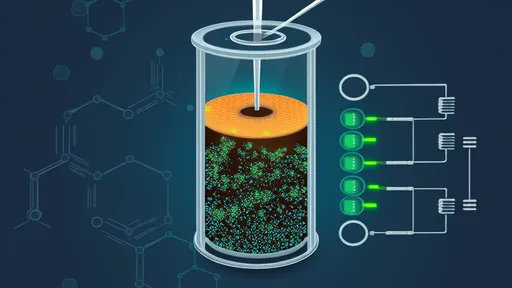
At its core, an MFC harnesses the metabolic activity of electroactive bacteria to break down organic matter in wastewater. These specialized microorganisms, often referred to as "exoelectrogens," possess the unique ability to transfer electrons extracellularly during their respiratory processes. As the bacteria consume organic pollutants, they release electrons that travel through an external circuit, creating an electric current. Meanwhile, protons migrate through a proton exchange membrane, completing the electrochemical reaction that mimics conventional fuel cells.
The environmental implications of this technology are profound. Traditional wastewater treatment plants are energy-intensive facilities that account for approximately 3% of total electrical load in developed nations. MFC systems invert this paradigm by transforming wastewater treatment from an energy consumer to an energy producer. Early pilot projects have demonstrated that MFCs can achieve organic removal efficiencies comparable to conventional activated sludge systems while generating measurable power outputs.
Recent advancements in electrode materials have significantly improved MFC performance. Carbon-based nanomaterials, such as graphene oxide and carbon nanotubes, have shown exceptional promise as anode materials due to their high conductivity and large surface area for bacterial attachment. On the cathode side, researchers are experimenting with platinum-free catalysts to reduce costs without sacrificing performance. These material innovations have pushed power densities from mere milliwatts per square meter to levels that now approach practical applicability.
Scaling challenges remain the primary hurdle for widespread MFC implementation. While laboratory-scale units demonstrate the technology's viability, translating these results to municipal-scale wastewater treatment requires overcoming several obstacles. Hydraulic retention times, system architecture, and microbial community stability all present complex engineering challenges at larger scales. However, several innovative approaches are emerging, including stacked MFC configurations and hybrid systems that combine microbial electrochemical technologies with conventional treatment processes.
The economic case for MFCs continues to strengthen as the technology matures. Life cycle analyses suggest that MFC-based treatment systems could achieve cost parity with conventional methods within the next decade, especially when considering the value of recovered energy and potential carbon credits. Some forward-thinking municipalities have already begun integrating MFC modules into existing infrastructure, using them to power remote sensors and low-energy components of treatment plants.
Perhaps most exciting are the potential applications beyond municipal wastewater. MFC technology shows particular promise for industrial wastewater treatment, where high-strength organic loads actually enhance power generation. Food processing facilities, breweries, and agricultural operations stand to benefit significantly from on-site treatment systems that offset energy costs. Additionally, MFCs are being adapted for use in extreme environments, from deep-sea applications to space missions, where their ability to simultaneously treat waste and generate power offers unique advantages.
As research progresses, scientists are uncovering new dimensions of MFC functionality. Some systems demonstrate the ability to recover valuable nutrients like phosphorus and nitrogen during the treatment process. Others show potential for desalination when configured as microbial desalination cells. These ancillary benefits could transform wastewater from a disposal problem into a resource recovery opportunity, aligning perfectly with circular economy principles.
The integration of MFC technology with other renewable energy systems presents another fascinating avenue for development. Hybrid systems combining MFCs with solar panels or wind turbines could create resilient, decentralized water and energy infrastructure. Such systems might prove particularly valuable in developing regions lacking centralized utilities, offering a path toward sustainable development that addresses both sanitation and energy poverty simultaneously.
Despite the challenges, the future of microbial fuel cells appears bright. As urbanization intensifies and climate change pressures mount, technologies that address multiple sustainability challenges simultaneously will become increasingly valuable. MFCs represent more than just incremental improvement in wastewater treatment—they offer a fundamental reimagining of how we view and manage one of society's most abundant waste streams. With continued research and investment, the vision of wastewater treatment plants as net energy producers rather than consumers may soon become reality.
By /Jul 28, 2025

By /Jul 28, 2025

By /Jul 28, 2025
By /Jul 28, 2025

By /Jul 28, 2025
By /Jul 28, 2025
By /Jul 28, 2025
By /Jul 28, 2025
By /Jul 28, 2025
By /Jul 28, 2025
By /Jul 28, 2025
By /Jul 28, 2025

By /Jul 28, 2025
By /Jul 28, 2025
By /Jul 28, 2025
By /Jul 28, 2025
By /Jul 28, 2025

By /Jul 28, 2025
By /Jul 28, 2025
By /Jul 28, 2025
