China's Foreign Trade Sees Strong Growth in August, with Integrated Circuits and Electric Vehicles Standing Out

Sep 15, 2025 By

China's foreign trade demonstrated remarkable resilience in August, with exports and imports both exceeding market expectations despite global economic headwinds and supply chain disruptions. The sustained growth momentum underscores the nation's evolving role in global value chains and its strategic pivot toward high-value manufacturing sectors.


Official data released by the General Administration of Customs revealed that export growth accelerated to 7.1% year-on-year in dollar terms, significantly outperforming economists' projections. Import figures similarly surprised to the upside, expanding by 0.3% against expectations of contraction. This robust performance defied concerns about weakening global demand and positioned China for stronger-than-anticipated trade performance throughout the third quarter.


The standout performers in China's export basket were undoubtedly integrated circuits and electric vehicles, which have emerged as the new champions of the country's export economy. Semiconductor shipments surged by 23% year-on-year, reflecting China's growing sophistication in electronics manufacturing and its increasingly important role in global tech supply chains. This growth comes amid ongoing international efforts to diversify chip production and concerns about geopolitical tensions affecting technology trade.


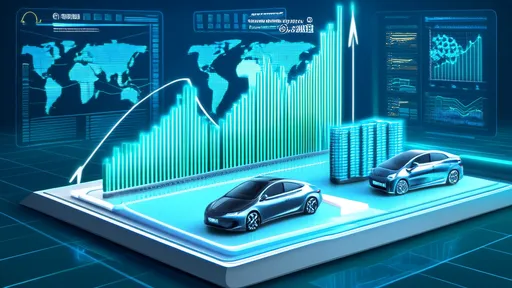
Electric vehicle exports recorded even more spectacular growth, skyrocketing by 122% compared to the same period last year. This explosive expansion demonstrates China's successful positioning at the forefront of the global transition to electric mobility. Chinese manufacturers have leveraged substantial domestic investment in battery technology and manufacturing scale to achieve cost advantages that are proving increasingly compelling in international markets.


Industry analysts attribute the strong performance to multiple factors, including the gradual easing of supply chain bottlenecks that had hampered production earlier in the year. The improved efficiency of port operations and logistics networks following COVID-related disruptions has enabled Chinese exporters to fulfill orders more reliably. Additionally, the depreciation of the yuan against the dollar has made Chinese goods more competitive in international markets, providing an additional boost to overseas sales.


Geopolitical considerations have also played a role in shaping trade patterns. China has been actively cultivating stronger commercial relationships with emerging economies in Southeast Asia, the Middle East, and Latin America, helping to offset softer demand from traditional Western markets. The Belt and Road Initiative continues to facilitate trade infrastructure development that supports these evolving trade flows.


While the overall trade picture remains positive, economists note some areas of concern beneath the surface figures. The modest growth in imports suggests domestic demand remains relatively subdued, reflecting ongoing challenges in China's property sector and cautious consumer spending. The mixed import data indicates that while industrial demand for raw materials and components remains steady, consumer goods imports have failed to gain significant momentum.


The strong export performance, particularly in technology-intensive sectors, reflects China's successful industrial upgrading strategy. Years of targeted investment in research and development, combined with policy support for advanced manufacturing, have enabled Chinese companies to move up the value chain. This transition from low-cost manufacturing to high-value technology exports represents a significant evolution in China's economic development model.


Looking ahead, trade experts anticipate that the current momentum may face challenges in the coming months. The global economic outlook remains uncertain, with major central banks continuing to tighten monetary policy to combat inflation. European energy concerns and potential recession in key markets could dampen demand for Chinese exports. Additionally, the full impact of U.S. legislation aimed at boosting domestic semiconductor production and reducing reliance on Chinese technology has yet to be felt.


Despite these potential headwinds, China's trade performance in August provides encouraging signs about the economy's adaptability and resilience. The successful diversification of export products and markets has helped cushion against sector-specific or region-specific downturns. The emergence of electric vehicles and integrated circuits as major export categories demonstrates how China has created new competitive advantages even as traditional manufacturing sectors face increasing competition from lower-cost producers.


The August trade data will likely influence policy decisions in the coming months, with authorities balancing support for export-oriented industries against the need to stimulate domestic demand. While the export sector continues to perform strongly, policymakers remain focused on achieving more balanced economic growth that relies less on external demand. The challenge will be to maintain momentum in high-value exports while addressing weaknesses in domestic consumption.


As global trade patterns continue to evolve in response to geopolitical realignments and supply chain reconfiguration, China's trade performance will be closely watched for indications of broader economic trends. The strong August figures suggest that despite numerous challenges, China remains deeply integrated into global trade networks and continues to adapt successfully to changing market conditions and technological developments.


Recommend Posts
Business

Hyundai's US Battery Plant Delayed Due to Immigration Raids, Labor Shortage Poses Challenge

By /Sep 15, 2025

Hyundai Motor Group's ambitious plans to establish a state-of-the-art electric vehicle battery plant in the United States have hit a significant roadblock, with project delays now attributed to a recent immigration enforcement raid and an ongoing struggle with labor shortages. The $5.5 billion facility, a joint venture with South Korean battery maker LG Energy Solution, was slated to bolster the automaker's EV production capabilities on American soil, aligning with both corporate strategy and broader national pushes toward electrification. However, the disruption underscores deeper challenges in the current economic and political climate, where immigration policies and workforce availability are increasingly pivotal to industrial projects.
Business

China's Service Consumption Potential Continues to Unleash, with Significant Growth in Revenue from Sports Venues and Homestays

By /Sep 15, 2025

China's service consumption sector continues to demonstrate remarkable resilience and growth potential, with recent data highlighting particularly strong performance in sports venues and homestay accommodation services. This trend reflects broader shifts in consumer behavior and economic restructuring, as experiences and lifestyle services gain prominence in the national economy.
Business

Stellantis Close to Finalizing Tariff Deal with U.S. Government

By /Sep 15, 2025

Stellantis NV and the U.S. government are reportedly in the final stages of negotiations to resolve a long-standing dispute over tariffs, according to sources familiar with the matter. The automotive conglomerate, formed from the merger of Fiat Chrysler and PSA Group, has been engaged in intense discussions with U.S. trade representatives for months. These talks appear to be reaching a critical juncture, with both sides signaling a willingness to find common ground on the contentious issue.
Business

Honda Launches $18,300 Light Electric Vehicle in Japan, Targeting Domestic Kei Car Market

By /Sep 15, 2025

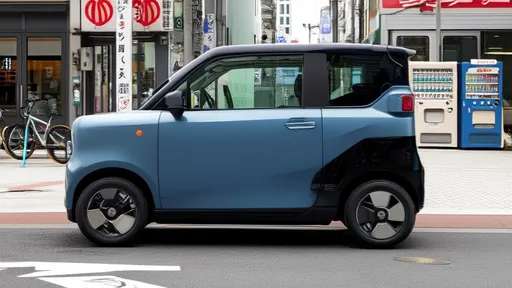
Honda Motor Co. has officially launched its new lightweight electric vehicle in Japan, priced at an accessible ¥2.68 million, or approximately $18,300. The model, named the Honda e-Mini, is designed specifically to tap into the nation’s thriving market for compact urban cars, known locally as kei vehicles. This strategic move signals Honda’s deepening commitment to electrifying its lineup while catering to the unique demands of Japanese drivers.
Business

ZF CEO Dr. Holger Klein to Step Down, Strategic Adjustments Face New Uncertainties

By /Sep 15, 2025

The automotive industry was caught off guard by the recent announcement that Dr. Holger Klein will be stepping down from his role as CEO of ZF Friedrichshafen AG. His departure, effective sooner than anticipated, comes at a critical juncture for the global supplier giant, which has been navigating the complex transition toward electrification and autonomous driving technologies. While the official statement cited mutual agreement and personal reasons, insiders suggest that underlying strategic disagreements with the supervisory board may have accelerated this leadership change. The news has sent ripples through investor circles and partner OEMs, raising questions about the continuity of ZF's current transformation roadmap.
Business

AI Plus" Continues to Advance, China's High-Tech Industry Sees a 14.5% Increase in Sales Revenue in August

By /Sep 15, 2025

China's high-tech sector has demonstrated remarkable resilience and growth momentum, with latest data revealing a 14.5% year-on-year surge in sales revenue for August. This acceleration comes amid the nationwide push to deepen the integration of artificial intelligence across industries, signaling a strategic shift toward technology-driven economic development.
Business

China's Import and Export Total Reaches 29.57 Trillion Yuan in the First 8 Months, with Private Enterprises' Contribution Increasing

By /Sep 15, 2025

China's foreign trade has demonstrated remarkable resilience amid global economic headwinds, with the nation's total import and export value reaching 29.57 trillion yuan during the first eight months of the year. This substantial figure underscores the continued vitality of China's economic engine despite persistent challenges in international markets and supply chain disruptions.
Business

Hong Kong's Net Gold Exports to Mainland China Surge in July Amid Rising Safe-Haven Demand

By /Sep 15, 2025

Hong Kong's gold exports to mainland China surged dramatically in July, marking one of the most significant monthly increases in recent years as global economic uncertainties and market volatility continue to drive safe-haven demand. The net export volume, which deducts inflows from outflows, reached levels not seen since the height of the pandemic, underscoring a renewed appetite for the precious metal among Chinese investors and central banks alike.
Business

China's Cultural Tourism Industry Enters Peak Summer Season, Events + Travel" Model Stimulates New Consumer Vitality

By /Sep 15, 2025

As the summer heat intensifies across China, the nation's cultural and tourism sector is experiencing a remarkable surge, driven by an innovative fusion of sports events and travel experiences. Dubbed the "events + tourism" model, this trend is injecting fresh vitality into consumer spending and redefining how people engage with destinations during peak travel seasons.
Business

Swiss Central Bank Deputy: No Need to Change Gold Holdings, Safe-Haven Demand Remains Strong

By /Sep 15, 2025

The Swiss National Bank sees no immediate need to alter its substantial gold reserves, according to a senior official, who emphasized that the precious metal continues to serve as a critical bulwark against economic uncertainty. In a recent address, Vice Chairman Fritz Zurbrugg underscored the enduring relevance of gold in the central bank’s strategy, pointing to persistent geopolitical tensions and financial market volatility as key factors sustaining its safe-haven appeal.
Business

Norwegian Central Bank's Interest Rate Cut Remains Undecided Amid Policy Disagreements Under Inflation Pressure

By /Sep 15, 2025

The halls of Norges Bank echo with a rare tension this month as policymakers grapple with a dilemma that pits domestic economic stability against global financial currents. At the heart of the matter lies a critical question: should Norway's central bank cut its key policy interest rate in the face of stubborn inflationary pressures, or hold firm amidst signs of economic strain? The answer is far from clear, and the division within the Monetary Policy and Financial Stability Committee grows more pronounced with each passing week.
Business

Mexico Imposes 50% Tariff on Chinese Cars, Analysis Suggests Chinese Automakers Still Have Cost Advantage

By /Sep 15, 2025

Despite Mexico's recent imposition of 50% tariffs on Chinese-made vehicles, industry analysts suggest that Chinese automakers retain significant cost advantages that may continue to fuel their expansion in international markets. The tariffs, announced as part of broader trade adjustments, were widely seen as a measure to protect domestic manufacturers and align with regional trade policies. However, the underlying economic dynamics indicate that Chinese companies are well-positioned to absorb these costs without severely undermining their competitive edge.
Business

Germany and Canada Reach Key Mineral Supply Chain Agreement to Reduce Dependence on Single Sources

By /Sep 15, 2025

Germany and Canada have forged a landmark agreement aimed at securing critical mineral supply chains, marking a significant step in reducing dependency on single-source providers. The pact, signed during high-level talks between officials from both nations, underscores a growing global recognition of the strategic importance of diversifying sources for minerals essential to modern technology and green energy transitions.
Business

Global Commodity Market Volatility Intensifies, Goldman Sachs Forecasts Crude Oil Prices to Fall to $50 by End of 2026

By /Sep 15, 2025

Global commodity markets are experiencing heightened volatility as shifting supply dynamics and uncertain demand patterns create a turbulent trading environment. The crude oil sector, in particular, has become a focal point for analysts and investors attempting to navigate the complex interplay of geopolitical tensions, production adjustments, and evolving energy transition policies. Against this backdrop, Goldman Sachs has released a startling projection that Brent crude could fall to $50 per barrel by the end of 2026, a forecast that has sent ripples through financial circles and energy-dependent economies.
Business

China's Foreign Trade Sees Strong Growth in August, with Integrated Circuits and Electric Vehicles Standing Out

By /Sep 15, 2025

China's foreign trade demonstrated remarkable resilience in August, with exports and imports both exceeding market expectations despite global economic headwinds and supply chain disruptions. The sustained growth momentum underscores the nation's evolving role in global value chains and its strategic pivot toward high-value manufacturing sectors.
Business

Iraq's Oil Exports Reach 104.7 Million Barrels in July, Continuing Changes in Energy Supply Landscape

By /Sep 15, 2025

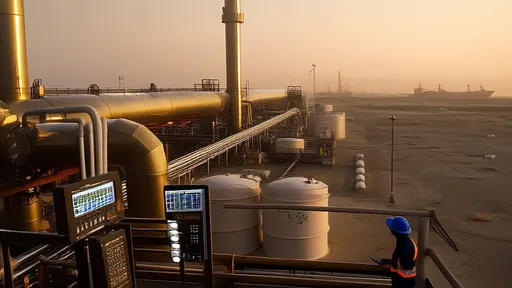
Iraq's oil exports surged to 104.7 million barrels in July, marking a significant milestone in the nation's energy sector and signaling ongoing shifts in global energy supply dynamics. This substantial volume not only underscores Iraq's growing influence in the oil market but also reflects broader geopolitical and economic currents reshaping energy flows worldwide. As traditional suppliers face production constraints and new consumer demands emerge, Iraq's rising output positions it as an increasingly pivotal player in meeting global energy needs.
Business

The 11th World Free Zone Organization Conference Opens in Hainan, Focusing on Global Prosperity and Sustainable Innovation

By /Oct 10, 2025

The balmy shores of Hainan Island witnessed a significant convergence of global economic minds this week as the 11th World Free Zones Organization Annual International Conference & Exhibition commenced in Haikou. Against the backdrop of China's ambitious Hainan Free Trade Port initiative, the four-day gathering has drawn over 1,300 delegates from more than 50 countries, representing a diverse cross-section of free zones, investment promotion agencies, and international trade organizations.
Business

Global Electric Vehicle Sales Growth Slows to 15% in August Amid Intensified Market Competition

By /Sep 15, 2025

Global electric vehicle sales growth slowed to 15% in August, marking a significant deceleration from the breakneck expansion the industry has enjoyed over the past few years. This cooling momentum signals a pivotal shift from a supply-constrained market to one increasingly dictated by consumer demand and intensifying competition. The initial wave of early adopters has largely been satiated, and automakers now face the more complex challenge of convincing the pragmatic mainstream buyer.
Business

Turkey Bans 29 Social Media Apps, International Tech Companies Face Business Adjustments

By /Sep 15, 2025

Turkey has announced a sweeping ban on 29 social media applications, sending ripples through the international tech community and forcing global companies to reassess their operational strategies in the key Eurasian market. The move, which authorities attribute to national security concerns and regulatory non-compliance, marks one of the most significant digital crackdowns in the country's recent history and poses immediate challenges for both users and technology firms operating within its borders.
Business

Bank of Japan Keeps Interest Rates Unchanged, Policy Normalization Path Still Uncertain

By /Sep 15, 2025

The Bank of Japan's recent decision to maintain its ultra-loose monetary policy has once again highlighted the complex challenges facing the world's third-largest economy. As other major central banks aggressively tighten policy to combat inflation, the BOJ stands alone in its cautious approach, reflecting deep-seated structural issues and a fragile economic recovery that continues to depend on substantial support.