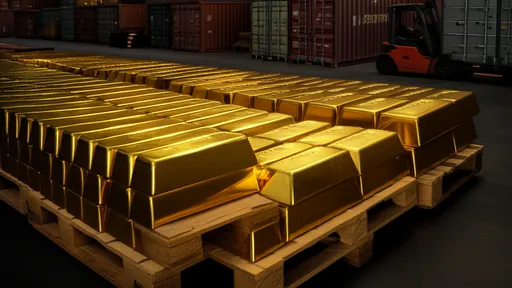
Hong Kong's gold exports to mainland China surged dramatically in July, marking one of the most significant monthly increases in recent years as global economic uncertainties and market volatility continue to drive safe-haven demand. The net export volume, which deducts inflows from outflows, reached levels not seen since the height of the pandemic, underscoring a renewed appetite for the precious metal among Chinese investors and central banks alike.
Market analysts attribute this spike to a combination of factors, including fears over inflation, currency fluctuations, and growing geopolitical tensions. With equity markets exhibiting heightened volatility and bond yields remaining unpredictable, gold has reasserted its traditional role as a store of value. The data, released by the Hong Kong Census and Statistics Department, highlights a net export of 58.3 metric tons, a substantial jump from the previous month's figures and a clear signal of robust demand from the mainland.
Economic instability appears to be a primary driver behind this trend. Recent fluctuations in the Chinese yuan, coupled with concerns about the slowing domestic economy, have prompted both institutional and retail investors to seek refuge in gold. Moreover, the persistent weakness in the property sector—a traditional pillar of wealth for Chinese households—has further accelerated the shift toward tangible assets like precious metals.
Another critical element fueling this demand is the proactive stance of the People's Bank of China, which has been steadily increasing its gold reserves over the past several months. Central banks worldwide have been diversifying their holdings away from the US dollar, and China is no exception. This strategic accumulation not only bolsters national financial security but also aligns with broader efforts to internationalize the yuan.
Hong Kong, as a major conduit for gold trade into mainland China, plays a pivotal role in facilitating these flows. The city's well-established infrastructure and tax-friendly policies make it an ideal hub for gold transactions. Industry insiders note that the increase in exports was also supported by improved supply chain conditions, which had been disrupted during the earlier part of the year due to logistical challenges.
Looking ahead, experts anticipate that the appetite for gold will remain strong, particularly if global economic conditions do not stabilize. The ongoing trade tensions between China and Western nations, along with unpredictable monetary policies from major economies, are likely to sustain the demand for safe-haven assets. Some analysts even project that gold prices could test new highs before the end of the year, given the current macroeconomic backdrop.
However, it's worth noting that such surges in demand are not without their challenges. Increased buying activity can lead to supply constraints, potentially driving up premiums on physical gold in the short term. Additionally, regulatory scrutiny on cross-border transactions may intensify, as authorities aim to ensure that capital flows remain transparent and compliant with international standards.
For now, the data from Hong Kong serves as a barometer of broader market sentiment—one that points toward caution and a preference for stability. As investors navigate an increasingly complex financial landscape, gold continues to offer a time-tested haven, and its movement through channels like Hong Kong provides critical insight into the undercurrents shaping global economics.

By /Sep 15, 2025

By /Sep 15, 2025

By /Sep 15, 2025

By /Sep 15, 2025

By /Sep 15, 2025

By /Sep 15, 2025

By /Sep 15, 2025
By /Sep 15, 2025

By /Sep 15, 2025

By /Sep 15, 2025

By /Sep 15, 2025

By /Sep 15, 2025

By /Sep 15, 2025
By /Sep 15, 2025

By /Sep 15, 2025
By /Sep 15, 2025

By /Oct 10, 2025

By /Sep 15, 2025

By /Sep 15, 2025
By /Sep 15, 2025
